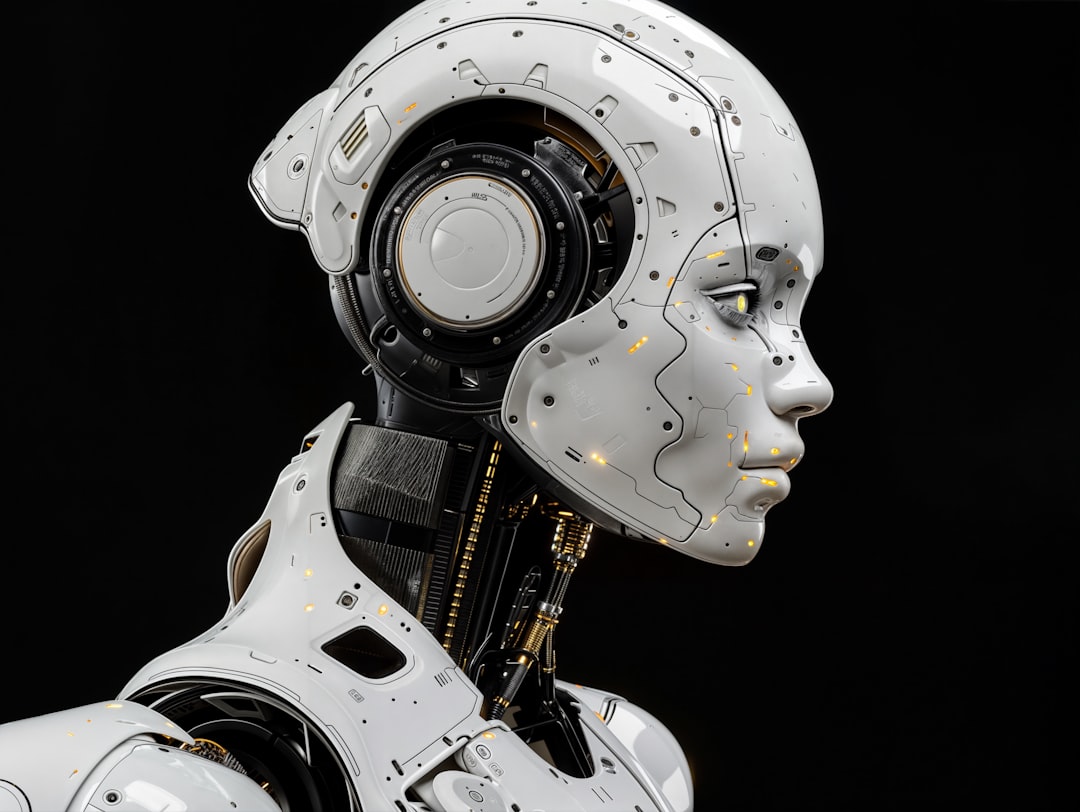
At the Tech Innovation Summit on March 18, 2026, Nothing CEO Carl Pei made a prediction that's been circulating tech circles ever since: smartphone apps are going to become obsolete, replaced by AI agents that handle tasks on your behalf without you needing to open a single application. It's a bold claim. It also has more substance to it than most CEO predictions do.
What Carl Pei Actually Said — and Why It Matters
Pei's argument is straightforward: the smartphone app model was designed for a world where software needed a fixed interface to be usable. You open Maps, you search for a restaurant, you tap directions. An AI agent collapses that into a single instruction: "Find me a good biryani place near my office and book a table for 1pm." The agent handles Maps, Zomato, and your calendar simultaneously, without you touching any of them.
This isn't pure speculation — it's already partially happening. Apple Intelligence, Google's Gemini with extensions, and Samsung's Galaxy AI are all early versions of this model. They can execute tasks across apps without the user switching between them. Pei's point is that this trajectory, taken to its logical conclusion, makes individual apps redundant as primary interfaces.
Nothing's interest in this isn't coincidental. The company builds phones and earbuds with strong software integration. A world where AI agents are the primary user interface is a world where hardware that runs agents well becomes more valuable — and where phone manufacturers who don't build good agent infrastructure become irrelevant faster.
The Case For This Prediction Being Correct
The average smartphone user has 80 apps installed but regularly uses fewer than 10. App fatigue is real. The friction of finding the right app, logging in, navigating its interface, and then switching to another app to complete a related task is something most users tolerate rather than enjoy. An AI agent that understands context and executes across services removes that friction entirely.
The technology to support this is maturing rapidly. LLMs can now reliably interpret natural language instructions and execute multi-step tasks. API access to major services is increasingly standardised. The infrastructure for agents to act on your behalf — with appropriate permissions — exists today in embryonic form.
The Case Against — Why Apps Won't Disappear Quickly
Apps aren't just interfaces — they're businesses. The App Store economy generates hundreds of billions annually. The companies behind apps have no interest in becoming invisible backend services that AI agents call without users ever opening their product. Expect significant resistance from app developers, platform owners, and advertisers who depend on in-app engagement metrics.
There's also a trust and control dimension. Many users will be uncomfortable with an AI agent that can make purchases, send messages, and book appointments on their behalf without confirmation. The permission frameworks required to make agents trustworthy are complex and not yet solved.
And certain app categories — games, creative tools, social media — aren't really task-completion tools. You don't use Instagram because you want to complete a task; you use it because scrolling is the point. Agents won't replace those experiences.
Key Takeaways
- Carl Pei's prediction has technical merit — AI agents that execute tasks across services are already emerging in Apple Intelligence, Gemini, and Galaxy AI
- The app economy is a multi-hundred-billion dollar business whose stakeholders will resist being disintermediated by agents
- Task-completion apps (booking, ordering, navigation) are most at risk; entertainment and creative apps are least at risk
- For Indian developers: the transition creates both risk (apps becoming invisible backends) and opportunity (building agent-native services)
Frequently Asked Questions
Q: When will AI agents actually replace apps?
A: For specific task categories, the shift is already underway. A complete replacement is unlikely within 5 years — but meaningful reduction in app-switching and direct app engagement for functional tasks could happen within 2–3 years as agents mature.
Q: What does this mean for Indian app developers?
A: It means building with agent-accessibility in mind — ensuring your service has good API access and can be called by AI agents, not just opened by humans. The developers who adapt early to being agent-friendly backends will have an advantage.